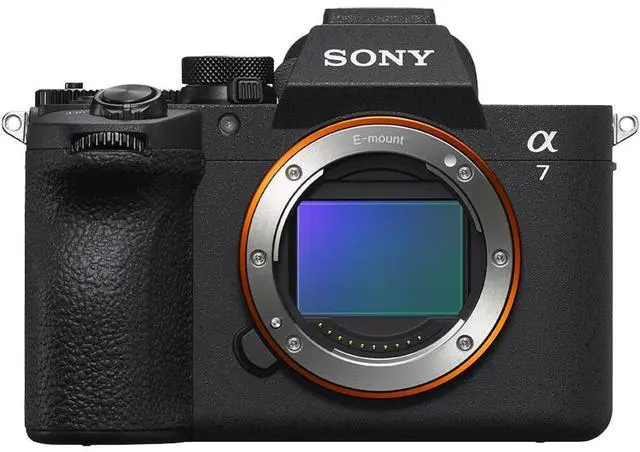
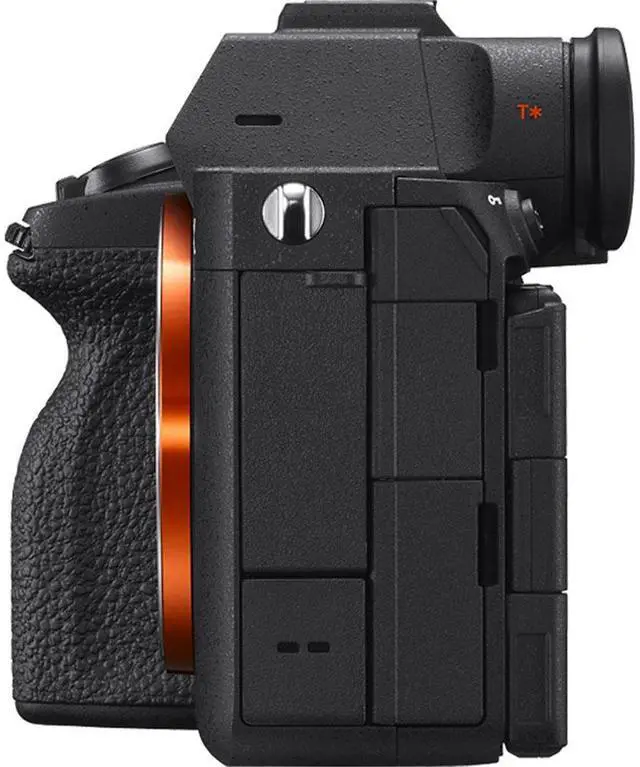
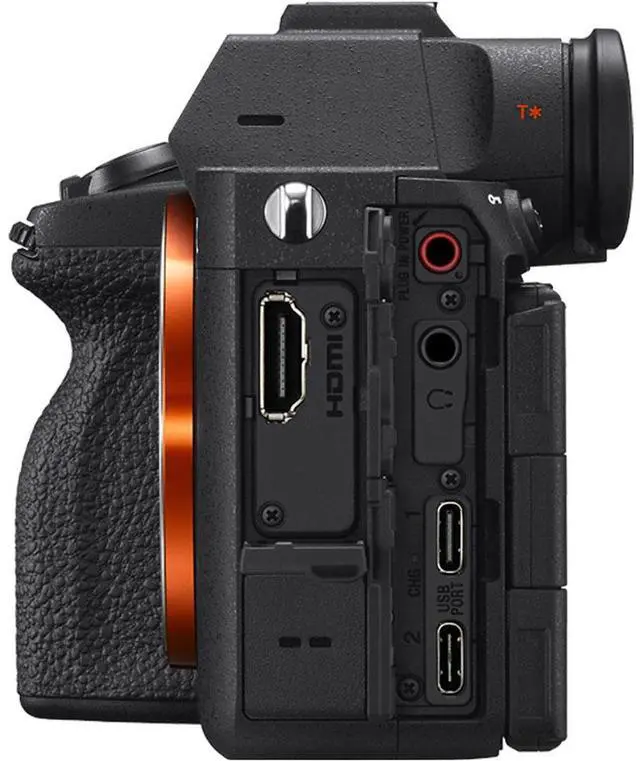
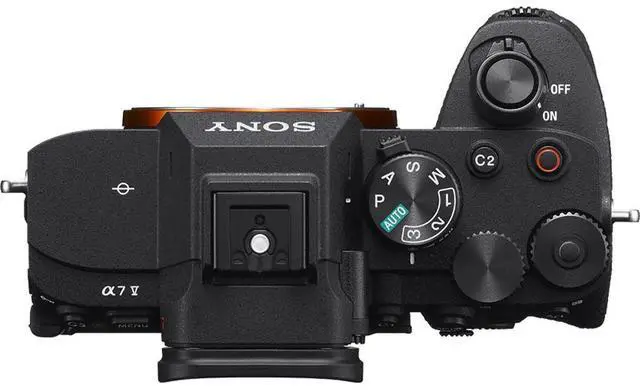
Full-frame partially stacked Exmor RSCMOS sensor with approximately 33.0 effective megapixels
A partially stacked Exmor RSCMOS image sensor features high-speed circuitry above and below the sensing layer. Sensor readout is approx. 4.5 x[1]faster than the α 7 IV, maximum shutter speed is 1/16000 s, [2]blackout-free bursts at up to 30 fps are available with AF/AE tracking, [3]and video can be recorded at 4K 120p. [4]This advanced sensor contributes up to an unprecedented 16 stops of dynamic range[5]with smooth gradations. Excellent image quality
The new 33.0 -megapixel[8]sensor and BIONZ XR2 processing engine work together to deliver up to 16 stops of dynamic range. [9]Lifelike gradations from shadows to highlights enable highly effective HDR processing when needed, and effective noise reduction applied at all sensitivities achieves high resolution throughout the ISO 100-51200 still and movie range (expandable to 50-204800 for stills and 100-102400 for movies). Composite RAW support
Composite RAW shooting automatically captures multiple RAW images that can then be composited[10]using a computer. [NR Shooting] and [Shooting for HDR] settings are provided. [NR Shooting] produces low-noise images while maintaining high resolution even at mid to high sensitivities. [Shooting for HDR] captures high dynamic range. [11]4, 8, or 16 images are captured at 30 fps[12]to allow handheld shooting. 5-axis IBIS for up to 7.5 -step central and 6.5 -step peripheral[14]stabilization
An advanced optical stabilization unit, gyro sensors, and algorithm accurately detect and correct image shake. Up to 7.5 -step central and 6.5 -step peripheral stabilization[14]allows handheld shooting without having to boost sensitivity. The body also works with compatible lenses[15]for even better stabilization. Even shake that is amplified at telephoto focal lengths is effectively suppressed. Creative Look creates visual moods in-camera
The Creative Look function makes it easy to create visual moods in-camera. [12]presets are provided, including [FL2] and [FL3] selections. The presets can be used as-is or edited to create custom looks. Adjustments can be made using 7 parameters[16]including contrast, saturation, highlight, shadow, and more while viewing the results on the monitor display. [17]Custom looks can be saved for later use.
Real-time Recognition AF: [19]A wider range of recognized subjects
Real-time Recognition AF supports [Human], [Animal], [Bird], [Insect], [Car/Train] and [Airplane] recognition, [20]and an [Auto] mode can automatically select the subject type. [20]Animal recognition has been improved by about 30%, [21]and now recognizes the eyes of some grazing and small animals in addition to the eyes, heads, and faces of dogs, cats, and similar. Bird recognition has been improved by about 50%. [21] High-density 759-point[23]focal plane phase-detection AF
759[23]phase detection points in a high-density focal plane phase-detection AF system cover approximately 94% of the image area for precise focusing. The large amount of data from the image sensor is processed in real time by the new processing engine to ensure ideal focus in situations that can normally be challenging, such as small subjects or people in a night scene where focus often falls on the background. Precise AF in low light
The latest AF algorithms achieve high AF precision down to light levels as low as EV- 4.0 in AF-S mode (ISO 100 equivalent, F 2.0 lens) so that AF is precise and reliable even in low light. Pre-Capture captures moments prior to shutter release[25]
This feature retroactively captures moments that occurred before the shutter was released. After half-pressing the shutter button to set focus, full-pressing the shutter captures a series of images starting from up to 1 second[26]before the shutter button was initially half-pressed at all framerates up to 30fps