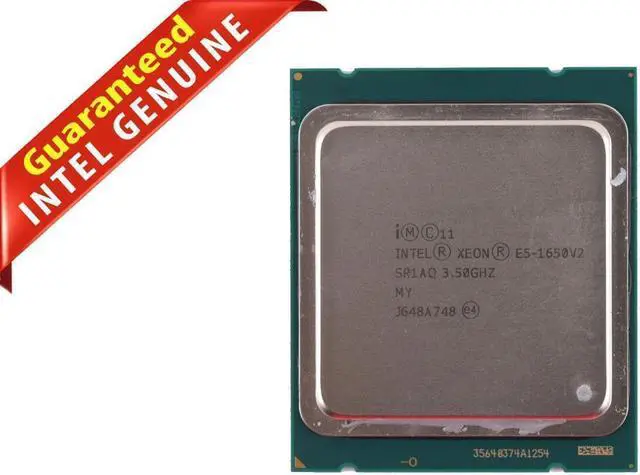
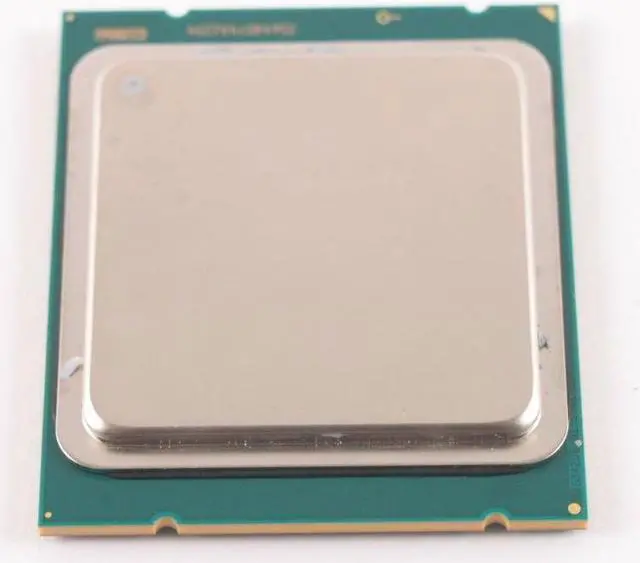
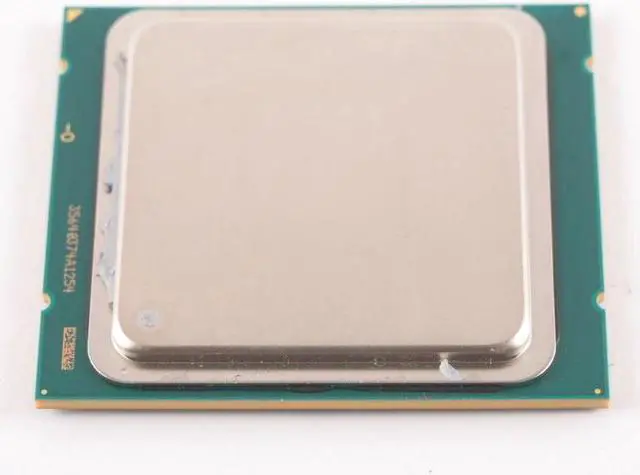
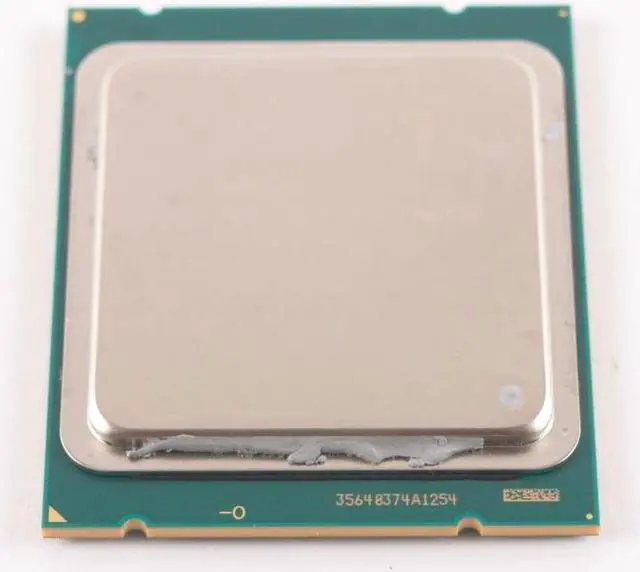
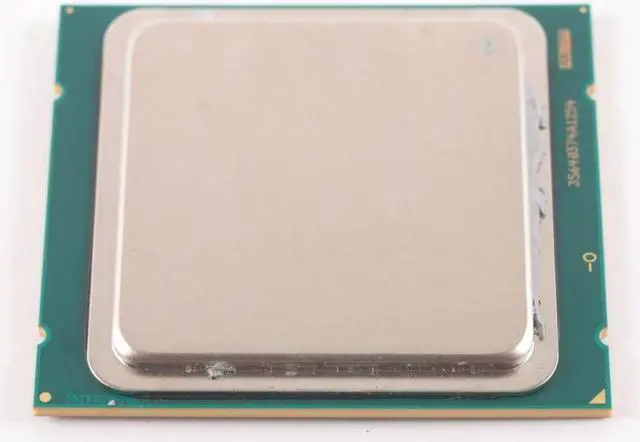
Intel Xeon E5-1650 v2 SR1AQ is a high-performance processor designed for servers and workstations.
Here are its key features:
Architecture: The Xeon E5-1650 v2 is based on the Ivy Bridge microarchitecture, manufactured on a 22nm process node, offering improved performance and energy efficiency compared to previous generations.
Core Count and Threads: It features 6 cores and 12 threads, thanks to Intel's Hyper-Threading Technology, allowing for efficient multitasking and parallel processing.
Base and Turbo Frequencies: The processor has a base clock speed of 3.50 GHz, with a maximum turbo frequency of up to 3.90 GHz, providing excellent single-threaded performance when needed.
Cache: It comes with a total of 12 MB of SmartCache, which helps improve performance by reducing latency and providing faster access to frequently used data.
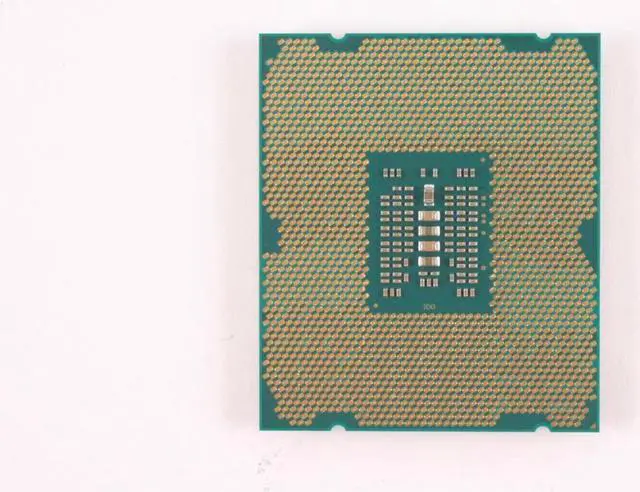
Socket: The Xeon E5-1650 v2 uses the LGA2011 socket, which is compatible with Intel C600 series chipsets and supports quad-channel DDR3 memory.
Thermal Design Power (TDP): The processor has a TDP of 130 watts, which indicates the maximum amount of heat generated under load. Proper cooling is essential for maintaining optimal performance and stability.
ECC Memory Support: The Xeon E5-1650 v2 supports Error-Correcting Code (ECC) memory, which helps detect and correct memory errors, enhancing system reliability in critical computing environments.
Virtualization Support: It includes Intel Virtualization Technology (VT-x) and Intel Virtualization Technology for Directed I/O (VT-d), enabling efficient virtualization of resources and improved security for virtualized environments.
Trusted Execution Technology (TXT): The processor features Intel Trusted Execution Technology, providing hardware-based security features to help protect against malicious software attacks.
Overall, the Intel Xeon E5-1650 v2 SR1AQ processor offers excellent performance, reliability, and security features, making it well-suited for demanding server and workstation applications such as data analysis, virtualization, content creation, and scientific computing.